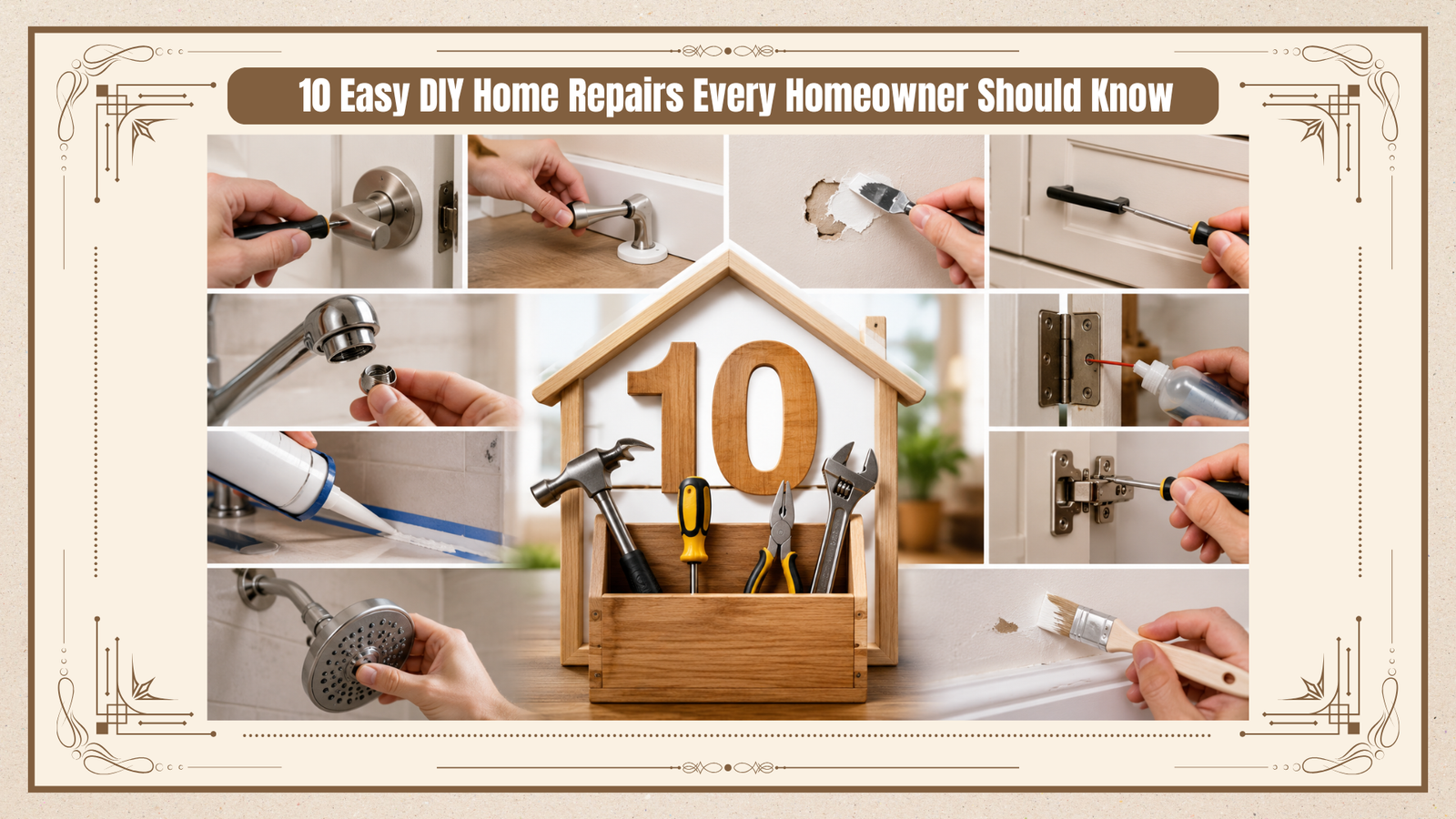
DIY home repairs can save time and money when the problem is simple enough to handle safely. You do not need to be an expert to take care of many small household issues, but you do need the right tools, patience, and a clear understanding of the task.
Here are ten common home repairs that many homeowners can learn to handle themselves.
1. Fix a Loose Door Handle
A loose door handle is often caused by screws that have gradually loosened through regular use.
Check the visible screws on the handle and tighten them with the appropriate screwdriver. Avoid overtightening, as this can damage the hardware or surrounding material.
2. Replace a Worn Door Stop
A damaged or missing door stop can allow a door to hit a wall or furniture.
Replacing a basic door stop is usually straightforward. Remove the old hardware if necessary, position the replacement correctly, and secure it according to the manufacturer’s instructions.
3. Repair a Small Wall Hole
Small holes left by nails or screws can usually be repaired with suitable wall filler or spackle.
Clean the area, apply the filler, allow it to dry, and sand the surface until it is reasonably smooth. The repaired area can then be primed and painted if necessary.
4. Replace a Cabinet Handle
Cabinet handles can become loose or damaged over time.
Remove the existing hardware and install the replacement using the correct screws. Check that the handle is aligned before tightening it completely.
5. Replace a Faucet Aerator
A faucet aerator can become clogged with mineral deposits, reducing water flow.
Depending on the faucet design, the aerator can usually be unscrewed, cleaned, or replaced. Protect the finish with a cloth if you need to use pliers.
6. Fix a Squeaky Door Hinge
A squeaky hinge can often be addressed with a small amount of suitable lubricant.
Apply the lubricant carefully to the hinge mechanism and move the door several times. Wipe away excess lubricant afterward.
7. Replace a Damaged Caulk Line
Old or damaged caulk around suitable household fixtures can allow water to reach areas where it should not.
Remove the damaged material, clean and dry the surface, and apply new appropriate caulk according to the product instructions.
8. Replace a Cabinet Hinge
A worn cabinet hinge can cause a door to sit unevenly or fail to close properly.
Remove the old hinge carefully, install the replacement, and adjust the hinge if the design allows it.
9. Replace a Showerhead
Replacing a standard showerhead is another relatively simple household project.
Unscrew the existing showerhead, clean the connection, and install the new one according to its instructions. Check for leaks after installation.
10. Touch Up Small Paint Damage
Small scratches and marks on painted surfaces can often be touched up without repainting the entire area.
Clean the surface first and use matching paint. Apply thin layers rather than trying to cover the damaged area with one heavy coat.
Know When to Stop
DIY does not mean doing every repair yourself.
Electrical work, gas-related problems, major plumbing issues, structural damage, and other potentially dangerous repairs may require a qualified professional. If you are unsure whether a repair is safe, stop and seek appropriate help.
Final Thoughts
Learning a few basic home repairs can make everyday maintenance easier. Start with small projects, use the correct tools and materials, follow product instructions, and never take unnecessary risks.
The best DIY repair is one that is completed safely and correctly.